Center for Renewable Energy Storage Technology (CREST)

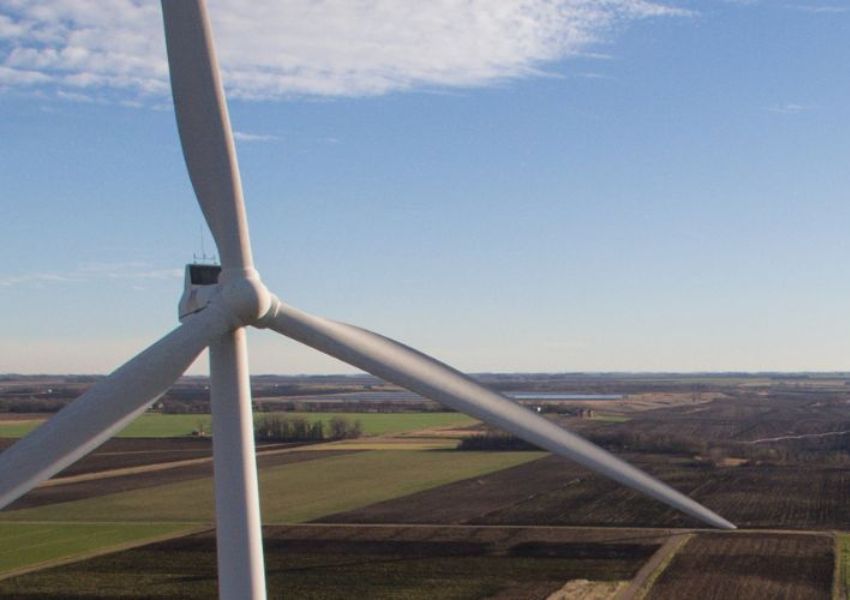
Wind turbine in the fields

The field of energy storage is poised for significant growth and attention in the coming years. More efficient and economic energy storage systems are needed. The Center for Renewable Energy Storage Technology (CREST) is leading the charge.

Research and Demonstration

CREST will organize teams and partnerships to continue research on energy storage and develop demonstration-scale projects. In this way, CREST will expand on the opportunities Greater Minnesotans have to learn more about energy storage technologies and potential applications.

CREST makes it possible to test systems at commercial or near-commercial scales, which is crucial in moving new technologies from labs into the commercial market. These projects are done in collaboration with partners from across the University of Minnesota and with many partners in the public and private sectors.

Through research, demonstration, education, and outreach, CREST provides guidance and direction for Minnesota rural communities, farmers, and energy vendors, on how to generate and store renewable power. 

Clean Energy Expertise

The launch of CREST in 2022 is the result of a decades-long partnership between UMN Morris and the University of Minnesota West Central Research and Outreach Center (WCROC) to advance clean energy solutions in west central Minnesota through research and demonstration projects:  

  • two industrial-scale wind turbines, the first in 2005 was the first at a public university in the United States, and the second in 2011
  • globally-unique wind-to-hydrogen-to-ammonia platform, turning wind and water into fertilizer
  • biomass gasification demonstration and research facility, converting crop residues into energy for heating and power
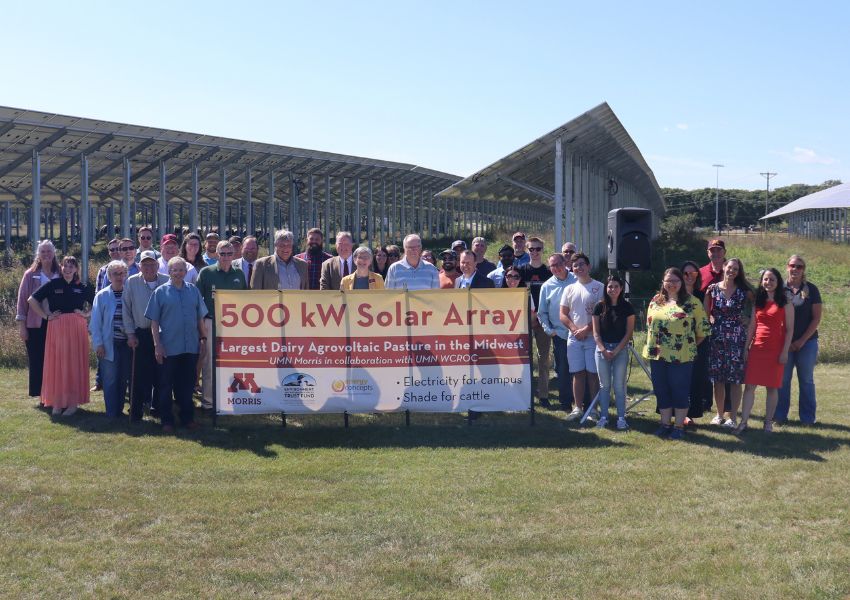
  • solar photovoltaic (PV) arrays
  • thermal energy systems

These clean energy solutions often produce more energy than can be used, thus the need for storage. 

10 million kWh
electricity produced by two wind turbines each year
100%
carbon neutral electric status achieved in 2020
1,000,000 lbs +
of organic waste diverted from landfills by campus and community composting program

We want to find ways to store green electrons and use them later to support our clean energy progress and carbon neutrality goals.

Headshot of Bryan Hermann
Bryan Herrmann
Vice chancellor for finance and facilities at UMN Morris

We are working to strengthen farms and rural communities. Clean energy and energy storage are important now and will grow in importance in the years ahead.

Headshot of Lee Johnsonton
Lee Johnston
Former director of operations at WCROC